Archives
- 2026-08
- 2026-07
- 2026-06
- 2026-05
- 2026-04
- 2026-03
- 2026-02
- 2026-01
- 2025-12
- 2025-11
- 2025-10
- 2025-09
- 2025-03
- 2025-02
- 2025-01
- 2024-12
- 2024-11
- 2024-10
- 2024-09
- 2024-08
- 2024-07
- 2024-06
- 2024-05
- 2024-04
- 2024-03
- 2024-02
- 2024-01
- 2023-12
- 2023-11
- 2023-10
- 2023-09
- 2023-08
- 2023-07
- 2023-06
- 2023-05
- 2023-04
- 2023-03
- 2023-02
- 2023-01
- 2022-12
- 2022-11
- 2022-10
- 2022-09
- 2022-08
- 2022-07
- 2022-06
- 2022-05
- 2022-04
- 2022-03
- 2022-02
- 2022-01
- 2021-12
- 2021-11
- 2021-10
- 2021-09
- 2021-08
- 2021-07
- 2021-06
- 2021-05
- 2021-04
- 2021-03
- 2021-02
- 2021-01
- 2020-12
- 2020-11
- 2020-10
- 2020-09
- 2020-08
- 2020-07
- 2020-06
- 2020-05
- 2020-04
- 2020-03
- 2020-02
- 2020-01
- 2019-12
- 2019-11
- 2019-10
- 2019-09
- 2019-08
- 2019-07
- 2019-06
- 2019-05
- 2019-04
- 2018-11
- 2018-10
- 2018-07
-
In all available E E
2020-08-31
In all available E2:E3 structures, the RING-type domain binds the E2 on a surface that is remote from the active site Cys (and therefore from the ubiquitin thioester) (Fig. 2). The non-contiguous E3-binding and active sites on the E2 imply that the role played by a RING to facilitate ubiquitin trans
-
Covalent inhibitors are well suited for targeting the E
2020-08-31

Covalent inhibitors are well suited for targeting the E1 Cy3 maleimide (non-sulfonated) of Ubl modifications. Because the E1 enzymes in Ubl modifications, such as the SUMO E1 and Atg7, have a slow turnover rate (Boggio et al., 2004), prolonged inhibition can be achieved without requiring compounds
-
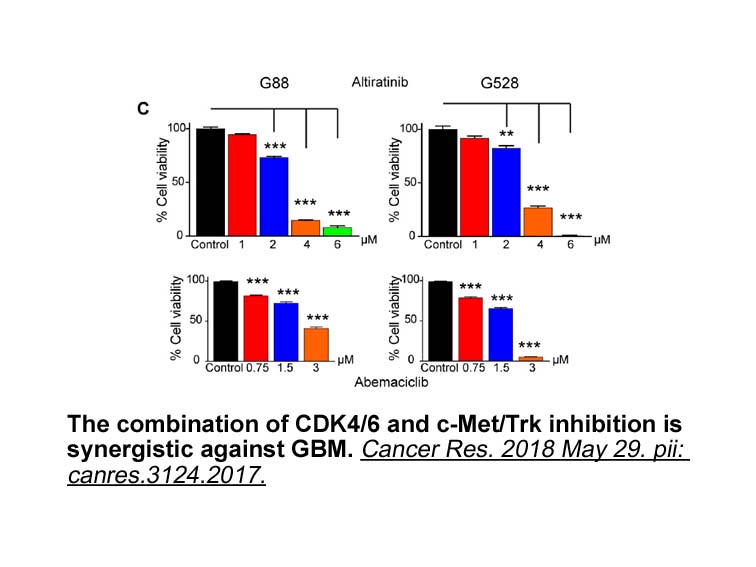
To investigate the role of DPP inhibition in inflammation in
2020-08-31
To investigate the role of DPP-4 inhibition in inflammation-induced bone resorption, we evaluated the effect of a DPP-4 inhibitor on LPS-induced osteoclast formation and bone-resorption in vivo. Our results showed that the DPP-4 inhibitor inhibited LPS-induced osteoclast formation and bone resorptio
-
The glycolytic pathway is a catabolic route that ends with
2020-08-31
The glycolytic pathway is a catabolic route that ends with the synthesis of pyruvate (Pyr). In Arabidopsis embryos, the conversion of phosphoenolpyruvate (PEP) to Pyr, catalyzed by pyruvate kinase (PK), is mainly located in the plastids [10], [11]. The preceding reaction is catalyzed by enolase (ENO
-
Following mutagenesis of the glucarpidase gene of Pseudomona
2020-08-28
Following mutagenesis of the glucarpidase gene of Pseudomonas sp. strain RS-16 [30], approximately 73% of the clones retained enzyme activity, as indicated by the clear zones and yellow precipitate surrounding their colonies. However, there were very few that had ‘halos’ around colonies that were da
-
topotecan br Chemistry The test compounds listed
2020-08-28
Chemistry The test compounds listed in Table 1, Table 2, Table 3, Table 4, Table 5, were synthesized as outlined in Scheme 1, Scheme 2, Scheme 3, Scheme 4, Scheme 5. Synthesis of 2–5 is described in Scheme 1. N-Sulfonylation of the aniline 26 with benzenesulfonyl chloride afforded the sulfonamide
-
However with regard to the involvement of PEP in
2020-08-28

However, with regard to the involvement of PEP in neoplastic processes, few studies and restricted to a very limited number of different tumors have been carried out [4], [18], [19]. Therefore, in order to ascertain the possible role of this enzyme in pathological proliferative tissues, in the prese
-
It is known that cigarette
2020-08-28
It is known that cigarette smoke increases the oxidative burden in the lungs of mice with emphysema, which leads to oxidative stress [[34], [35], [36]]. However, in addition to cigarette smoke, studies have shown that endogenous oxidative stress is associated with proteolytic L-161,982 in several mo
-
br E mediated E discharge E ligases simultaneously interact
2020-08-28
E3-mediated E2 discharge E3 ligases simultaneously interact with the substrate and the SUMOD charged E2 enzyme to catalyze the discharge of the thioester-bound SUMOD from the E2 to the substrate. E3 interaction with SUMOD via a SIM results in a closed conformation which is highly reactive and lea
-
In order to derive a better understanding of the
2020-08-28

In order to derive a better understanding of the results from our SAR study, we utilized Glide to model the binding of the SAR compounds with the non-active site pocket of TS-DHFR shown in C. The majority of models position the phenolic moiety of these compounds within the non-active site pocket, wh
-
PG 01037 dihydrochloride br Chagas disease Chagas disease an
2020-08-28
Chagas disease Chagas disease, an NTD caused by the protozoan Trypanosoma cruzi, affects 8–10 million people globally. More than 10,000 deaths are caused by the disease each year, and nearly 70 million people are susceptible to infection (Manne-Goehler, Umeh, Montgomery, & Wirtz, 2016). Chagas di
-
In this study new and more extended tables
2020-08-28
In this study, new and more extended tables of parameters were estimated for pure fluids and binary mixtures that are relevant to biodiesel systems. Also, calculations for glyceride systems will be shown, which is a topic not investigated before with the CPA model. As before [21], [22], [23], [24],
-
br Conflict of Interest br Statement of Authorship br Introd
2020-08-26
Conflict of Interest Statement of Authorship Introduction Plant endopeptidases are involved in many important biological processes. Recent developments in molecular biological techniques have revealed trace amounts of endopeptidases play essential roles in plant development, turnover of ph
-
Generally glycines and other small residues
2020-08-26
Generally, glycines (and other small residues such as alanine) present in a helical GxxxG-motif that are facing the same side of the helix form a uniform surface that enables direct contact with a second helix. Crystal structures of multipass membrane proteins have demonstrated that GxxxG-motifs are
-
ISX 9 In a study carried out by
2020-08-26
In a study carried out by Aunis et al. the properties of soluble DBH and membrane bound were examined [23]. The membrane bound enzyme was shown in ISX 9 to the soluble form to have thermal denaturation at higher temperatures of 43.5–44°C. Similar discontinuities in the Arrhenius plots were obtained
16260 records 806/1084 page Previous Next First page 上5页 806807808809810 下5页 Last page